
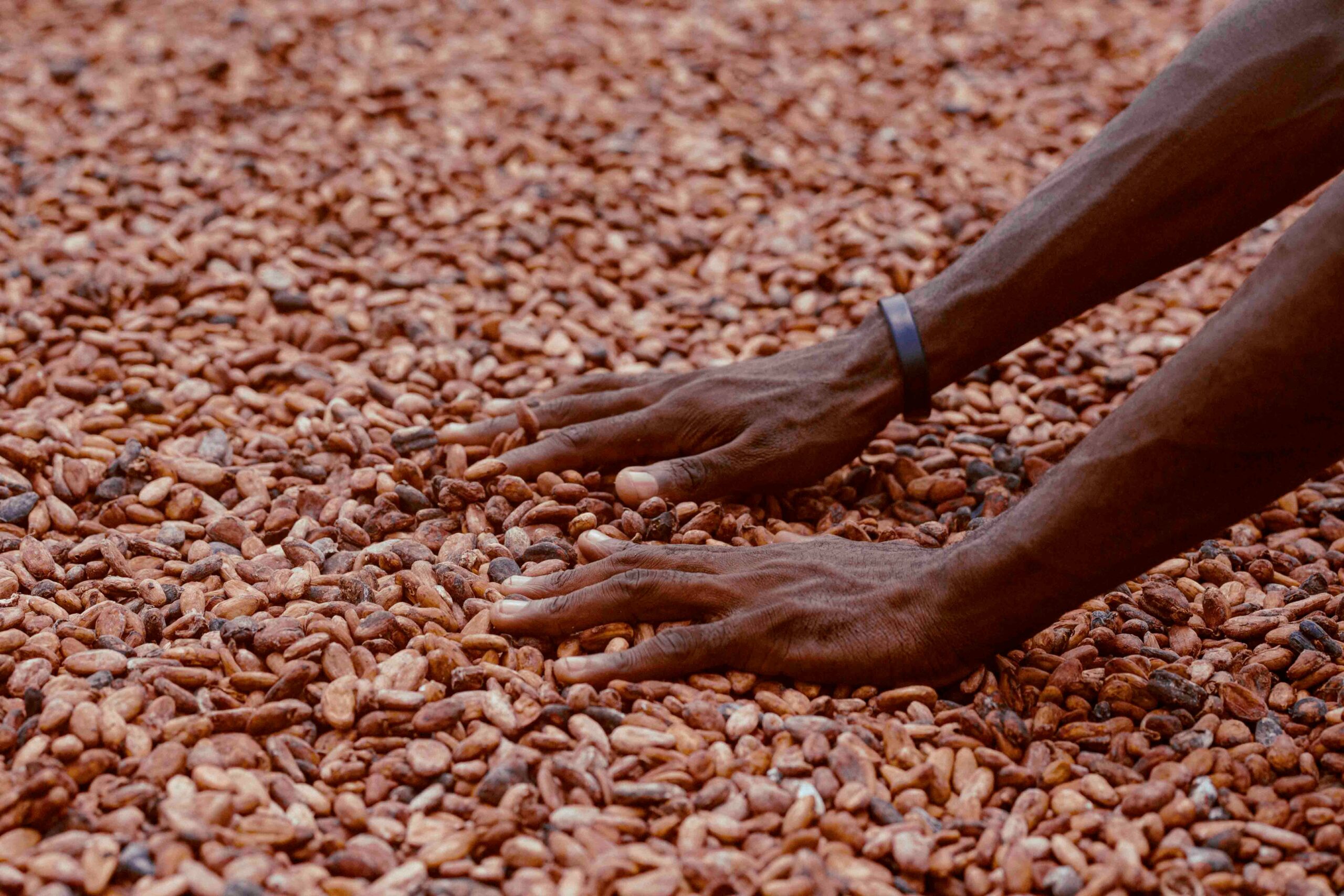
In 2012, a humorous but theoretically sound scientific study led by the Swiss physician, Franz Messerli showed a strong correlation between chocolate consumption and the number of Nobel prize winners in a country per capita¹. The finding subtly suggested that chocolate consumption and Nobel Prize winners go hand in hand. Switzerland topped the ranking. There is, however, another story chocolate tells. One not of prizes and prosperity, but of poverty, child labour, and illiteracy buried deep in its supply chain.
A Promise Made, A Promise Broken
West Africa, mainly Côte d’Ivoire and Ghana, supplies about 60% of the world’s cocoa that is used in making chocolate. At the same time, child labour has been documented among farming communities in this region for decades. It is estimated that almost 2 million children are engaged in child labour in the cocoa sectors of Ivory Coast and Ghana alone² ³. The same estimates suggest that a little over 4 in 10 of these children perform hazardous tasks, such as using machetes, carrying heavy loads, or being exposed to toxic pesticides.
The chocolate industry signed the Harkin-Engel Protocol of 2001, a voluntary pledge to end child labour in cocoa by 2005, yet here we are. In fact, the global chocolate industry has previously fanned the embers of hope in the world by setting goals to eliminate child labour from their production and supply chains in 2005, 2008, 2010, 2020, and most recently by 2025 only to falter, disappoint and abdicate at the last minute. Currently, no single future date beyond the missed 2025 target of pulling the curtain on child labour in the chocolate industry has been set.
The Infernal Poverty Trap
This exploitation of children for cocoa production is not only a systemic failure on the corporate level. It goes beyond simple corporate greed. Usually, recalcitrant poverty in farming communities creates an enabling environment where child labour and exploitation look like a blessing to large families firmly clenched in the jaws of poverty. Many cocoa farmers for example, still earn less than $1/day with some farmers earning a little bit higher than this paltry sum⁴. Imagine having to raise a family of 6 on that income. How do you pay for food or for your child’s school admission fees and books?
When you realise that the overall benefits of operating or owning a cocoa plantation are somewhat marginal compared to being at the top of the production pyramid overseas, you also become aware of how it jeopardises local food production by competing for the means of food production. This is all happening in the face of rising cost of living in Ghana, Ivory Coast or other cocoa producing countries.
Why Certification is not enough
Highly creative citizens and NGOs have tried to solve these problems through certification. This is why labels like “Fairtrade”, “Rainforest Alliance”, and “Utz” were created – to address issues such as child labour amongst others. Yet any keen observer, especially those close to the farms, knows that relying on these measures alone is like putting a fresh coat of paint on a crumbling house. The surface looks reassuring, but the structural cracks underneath remain largely untouched.
Even the most self-styled ethical nations are not innocent. Switzerland, home to the world’s largest chocolate companies, and Norway, whose sovereign wealth fund holds significant stakes in cocoa-linked businesses globally, are as complicit in this exploitation as any other. I’ve heard it being said in heated discussions with well-informed individuals that the billionaire families who claim to have made their fortune from the cocoa value chain through products like chocolate or instant hot chocolate have done so by riding on the backs of millions of African children. Your chocolate is most likely not child labour free. But that is not the entire story.
There are several reasons why relying on certification alone has not stopped child exploitation in these farms. First, most of the time, certification is largely self-reported and when independent inspectors or auditors visit, the children are quietly shepherded off farms the moment inspectors arrive – thus evading authorities. Secondly, there aren’t any stringent legal consequences for failure to meet certification standards. In essence, when a farm is found to use child labour, there is no financial penalty, no legal liability for the certifying body, and often no consequence for the chocolate brand involved. While there are numerous reasons why these now-popular certification labels fall short, allow me to leave you with two closely linked ones before we move on.
Many of us sit in the comfort of our living rooms enjoying what is supposed to be a “guilt-free” treat due to the trust we have placed in these labels. This is precisely the problem; the way the labels are set up at the moment, it is consumer trust that does the heavy lifting, not binding regulations. In fact, I have argued among close friends that these certifications simply function as one of the best marketing tools ever rather than an enforcement instrument by giving companies reputational cover without requiring structural change. And what does certification actually mean by the time we have a chocolate in hand? Cocoa beans from both certified and non-certified farms are mixed at the trader and cooperative level before they are shipped to be processed into chocolate. This makes true traceability nearly impossible and the certification label increasingly meaningless.
The Race for Traceability Technology
There is a renewed movement to use digital technologies such as AI, GPS mapping and blockchain by some companies like Nestlé, Barry Callebaut, other organisations and governments to try to quickly and effectively stem the tide. This looks quite promising at the moment. It however comes with significant fresh challenges. Current traceability technology tracks the origin of a bean but it cannot yet track the conditions under which it was harvested. Therefore, a GPS-mapped farm is for example not necessarily a child-labour-free farm. To complicate matters, these traceability technologies that have received heavy investment do not seem to have cut off the hydra-headed problem of bean mixing at the cooperative and trader level. This means the chain of “custody” remains easily broken long before the chocolate bar is wrapped.
From another angle, the whole arrangement looks like the chocolate industry seeks to pay for indulgences – paying for absolution without changing the underlying sin. The question worth asking is whether this traceability technology race represents genuine structural reform or merely an elaborate exercise in reputational management. Companies spending millions on blockchain while cocoa farmers still earn below $1/day only seems like the industry has found a way to look like it is solving the problem without addressing what actually drives it–poverty.
Are We Complicit as Consumers?
In the 2023 musical and fantasy film, Wonka, an Oompa-Loompa who is basically a small fictional humanoid character confronts young Willy Wonka for taking cacao beans from his homeland without understanding their significance. The moment reflects a broader reality: consumers often enjoy chocolate while remaining distant from the labour and exploitation embedded within global cocoa supply chains.
Since at least the early 2000s, across the world, journalists, activists, and groups have successfully spread awareness of cocoa’s child labour problem. This is well documented in mainstream media, documentaries, conferences and even supermarket campaigns. Yet chocolate sales have grown consistently despite this awareness. It could be lightly interpreted that our behaviour has not changed – knowledge alone has not translated into purchasing shifts.
One of the reasons for this may be the invisible but powerful “ethical distance” that global supply chains create. There is sufficient psychological separation between the consumer and the harm that moral discomfort rarely triggers action. Unlike fast fashion or oil, the chocolate we consume is associated with comfort, celebration, and childhood innocence. This makes us as its consumers especially resistant to interrogating it.
As pointed out earlier, the industry has also been skilful at framing this as a consumer choice problem rather than one requiring regulatory or structural reforms, which conveniently shifts responsibility downward. If almost three decades of blaming the consumer has changed nothing, then maybe individual consumer choice may not be the answer we are desperately seeking. Are consumers complicit in this or merely powerless within a system designed to keep them that way?
The Cultural Debate of Child Labour vs. Child Work
Growing up in northern Nigeria, my siblings and I would often help on our parents’ farms after school by weeding around tender crops, or harvesting corn and groundnuts. Even outside of traditional farm work, we helped harvest the occasional fruit – grape from my dad’s trellis, or lemon and guava from the small orchard behind the house. The whole time, my siblings and I were excited and honoured to have a minor avenue to contribute to our family’s subsistence. To claim that we were exploited through child labour would be absurd. Yet, I acknowledge that child labour exists. Otherwise, why am I writing this blog post? The reality is neither black and white nor as simple as most imagine.
Not all child labour looks the same, and not everyone agrees on where the line is. In cocoa farming communities across West Africa, children have long worked alongside their parents on family plots – carrying pods, drying beans, learning the rhythms of the land. For these families and many in those communities, this is not exploitation. Rather, it is good upbringing.

Western advocacy groups and certification bodies have not always been comfortable with that distinction. Their frameworks, shaped by European and American notions of childhood as a time exclusively for school and play, can struggle to account for contexts like in my own childhood and that of many other children where family farming is both livelihood and culture. Some African scholars have pushed back firmly on this, arguing that outsiders risk criminalising a way of life they do not fully understand.
But this debate has limits. There is a meaningful difference between a child spending weekends on a family farm and a child trafficked from Mali or Burkina Faso, working in hazardous conditions for someone else’s profit. The cultural complexity is real. But it cannot excuse the children who are trafficked, bonded, or forced to work in dangerous conditions far from their families.
The Role of Gender
Girls in cocoa producing communities may seem almost absent from the problem of child labour in cocoa farms but they are present in the background bearing the weight of domestic work to free boys and adults to be present on the cocoa farms⁵. Many girls in cocoa producing communities are involved in cooking, fetching water, caring for siblings amongst other domestic duties. They may therefore be sent away from schools permanently not directly because of working on cocoa farms but for household work. This makes them statistically invisible in surveys about cocoa-related child exploitation. Because they are almost absent in the statistics that drive industry reform efforts, most well-meaning interventions rarely reach them. The cost continues to haunt these girls up to their adulthood by compounding. A girl who does not complete her education is more likely to raise her own children in the same poverty that made their labour necessary in the first place.
Above the Law, Below the Equator
What is surprising is that consumer awareness, now over two decades old, has moved the needle no more than industry criticism has. This begs the question of whether individual choice is the right lever we should be pulling at as a global community or whether some form of binding regulation is the only thing with real teeth. On an industrial scale, it seems that the current legal structures are not able to arbitrate and set a precedent of ethical, economically viable and just means of exploiting these cocoa pods that form the primary ingredient of one of humanity’s most cherished treats. While it is easy to apportion blame, the motivation for any well-meaning individual or organisation should be to find a solution to this pervasive problem. An example that comes to mind is the famous Nestlé vs Doe reversal in June 2021 by the US Supreme Court of a decision that held Nestlé liable for aiding and abetting child slavery⁶.
According to the Court, the company could not be held liable for the alleged forced labour in Ivory Coast due to insufficient links to Nestlé’s conduct in the United States, a central anchor that is required to invoke the jurisdiction of federal courts under the Alien Tort Statute (ATS). While the details of the case are complex, the primary suit came from six Malian individuals who claimed they were trafficked to work on farms in Ivory Coast which supposedly had some affiliations with Nestlé. In fact, the main reason no sufficient link was found was the presumption against extraterritoriality. In simpler terms, the Supreme Court ruled that because the abuse occurred on foreign soil, American courts could not hold an American company accountable for it. Whether this legal gap is something that corporations have every incentive to keep open or that human rights activists hope to close someday is an open question.
Conclusion
Switzerland, the country that topped Messerli’s chocolate-Nobel ranking, is also home to some of the world’s largest chocolate companies. The correlation he found was playful, or even charming. But there is another correlation worth considering. The one between the countries that consume the most chocolate and the countries that bear none of its costs, and between the countries that produce it and the ones that remain, generation after generation, outside the doors of any prize.
Two decades of pledges, certifications, and technology have not broken that pattern. The children are still in the fields. The girls are still invisible in the data. The lawyers are still arguing about jurisdiction. And the chocolate still sits on the shelf, wrapped in the language of ethics, waiting to be bought.
Until binding regulation replaces voluntary commitment, the sweetness will continue to be unevenly distributed – and the bitterness, as has been the case with human history, left to those who can least afford it. And maybe, it is not only sweetness which might be unevenly distributed but cognitive triumph. The real question to ask is not whether you will win the next Nobel Prize due to your regular chocolate consumption. The harder one is: who will decide if your next chocolate bar is child labour free?
Sources
1. Messerli FH. Chocolate consumption, cognitive function, and Nobel laureates. N Engl J Med. 2012;367(16):1562-1564. doi:10.1056/NEJMon1211064
2. NORC at the University of Chicago. Assessing Progress in Reducing Child Labor in Cocoa Production in Côte d’Ivoire and Ghana. 2020.
3. Annual Report 2024 | ICI Cocoa Initiative. Accessed March 3, 2026. https://www.cocoainitiative.org/annual-report-2024
4. The Crumbling Empire of Chocolate. UNDP. Accessed May 3, 2026. https://www.undp.org/africa/waca/blog/crumbling-empire-chocolate
5. Kembou S, Wolf S, Jasinska K, Ogan A. Child Labor Activities and Schooling Decisions in Rural Côte d’Ivoire. Consortium for Policy Research in Education; 2023.
6. Nestlé v Doe: United States Supreme Court overturns Nestlé’s liability for child slavery in cocoa supply chains, insufficient “domestic conduct” to invoke the Alien Tort Statute – Human Rights Law Centre. Accessed March 5, 2026. https://www.hrlc.org.au/case-summaries/2021-8-30-nestle-v-doe-united-states-supreme-court-overturns-nestls-liability-for-child-slavery-in-cocoa-supply-chains-insufficient-domestic-conduct-to-invoke-the-alien-tort-statute/