
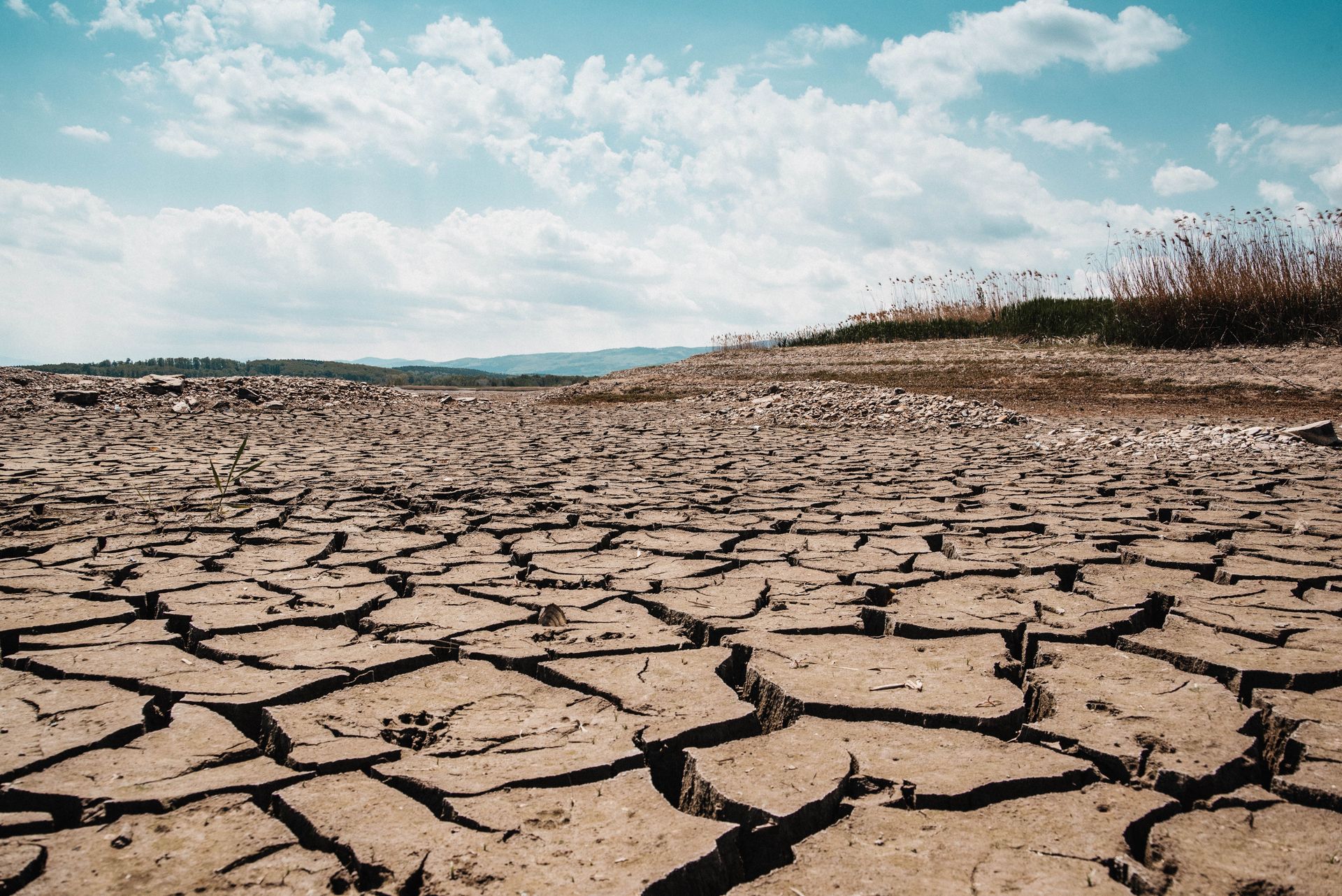
Water, a sacrosanct, ever-present substance, is a harbinger of life’s delicate presence. It is one of the substances sought after in the extra-terrestrial search for life beyond earth and our solar system into galaxies far spread in the universe. Yet, here on earth, where life seems to be flourishing, its continuous availability is under immense threat. When the last drop of drinkable water dries up, every human civilization that has been built till date will be reduced to dust and ashes.
Billions of individuals still lack adequate access to this essential element of life, water, and about half of the global population regularly experiences severe water stress for at least some part of the year1. This condition is exacerbated by the current climate crisis.
Water scarcity often takes either of two forms from place to place. It can be attributed to either physical or economic scarcity2. Physical scarcity arises from ecological conditions that limit water supply; economic scarcity from the absence of adequate infrastructure to access it. For example, physical scarcity occurs when ecological conditions like drought, depleted aquifers, and shrinking glaciers limit water supply; while economic scarcity happens for instance when the absence of the pipes, treatment plants, and distribution networks necessary to access it causes scarcity. The two often occur together. A common thread between the various forms in which it occurs and propagates is the widespread harm it inflicts on systems involving public health, international security, and international trade – including the modern economic systems that the wheels of modern life ride on. Water stress has been known to spark mass migrations of humans and animals, and to ignite conflict over the dwindling water bodies. In a previous article, which you can read here, I explore this kind of mass migration in more depth.
Currently, 2.1 billion people do not have access to safe drinking water in today’s world3. The regions bearing the heaviest burden of water stress are concentrated in the Middle East and North Africa (MENA), South Asia, and Sub-Saharan Africa. In MENA, over four in five people already live under extreme water stress, while in South Asia, the figure is nearly three in four4. Sub-Saharan Africa faces a different but equally urgent problem: the water often exists, but the infrastructure to reach it does not.
How climate change exacerbates water stress
Global warming and water scarcity are now inseparably linked. Climate change is already driving droughts and floods across the world, disrupting water availability for millions of people in ways that are becoming harder to reverse.
The scale of the projected loss is striking. UN experts project a 20% reduction in renewable water resources for every 1°C rise in global average temperature5. As the planet warms, water evaporates faster and in greater volumes. That moisture accumulates in the atmosphere and returns as rainfall that is heavier, more intense, and increasingly erratic – overwhelming soils that cannot absorb it quickly enough, driving floods that destroy the very infrastructure communities depend on to store and distribute clean water. A case in point is the recent flooding that occurred in Accra, Ghana, in June this year (2026), claiming precious lives and destroying property.
But the same warming that produces these deluges also intensifies dryness. Rising temperatures increase atmospheric and surface aridity in already vulnerable regions, accelerating the depletion of rivers, lakes, and underground aquifers that millions rely on as their primary water source. Glaciers – which act as natural reservoirs for roughly two billion people – are retreating at unprecedented rates, threatening long-term water insecurity across large parts of Asia and South America.
The result is a world of extremes: too much water in some places, too little in others, and the diminishing ability to predict which will come next.
How water stress affects public health systems
Dwindling access to safe water forces populations toward contaminated sources, and with that shift comes exposure to a cascade of infectious diseases, diarrhoeal illness chief among them. Water stress doesn’t merely increase the probability of exposure; it actively reshapes the environmental conditions that drive outbreaks, accelerating transmission in ways that are difficult to predict and harder still to contain.
The effect on public health systems is immediate and compounding. Surging caseloads stretch surveillance capacity, divert resources from routine care, and demand rapid epidemiological responses that many health ministries – particularly in low- and middle-income countries – are structurally ill-equipped to provide. An overstretched system slows down and degrades from within. The quality of guidance it produces, the speed at which it detects emerging threats, and the reliability of the interventions it recommends all suffer in tandem. The water problem can quickly snowball into a governance problem.
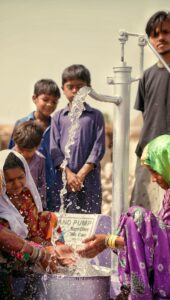
And it is ordinary people who absorb the consequences of that failure. Children, for example, are disproportionately vulnerable to diarrhoeal diseases like cholera, dysentery, typhoid fever, and rotavirus gastroenteritis, which remain some of the leading killers of children under five globally. Water stress increases that risk acutely. Women, who in many affected regions in the global south bear primary responsibility for water collection, face compounded burdens. They must cover longer travel distances to reach safe sources. Their exposure is heightened during water collection. That is not all: women might also have to deal with the invisible toll of managing household health when their children fall ill. Men, too, are not spared. Those in agricultural or informal labour who depend on water access for their livelihoods, and who may delay seeking care as systems become less reliable and trust erodes, may have to deal with a punishing cycle in which missed work and medical costs pull already stretched households deeper into poverty. This could make financial or physical recovery increasingly difficult to achieve.
How water stress affects international security
Water stress is no longer simply an environmental or public health problem. It has increasingly become a fault line in international relations. This is not new.
Almost throughout the twentieth century, water cooperation between states substantially outweighed discord. Since 2017, trans-boundary conflict around water resources has progressively taken the centre stage in international relations. About 40% of the world’s population lives in trans-boundary river and lake basins, yet only a fifth of countries have cross-border agreements to jointly manage these shared resources6. The disputes over the Nile, the Tigris-Euphrates, and the Indus show how a dam or diversion built in one country can threaten the water supply and the survival of millions living downstream.
The displacement consequences are equally stark. According to the World Bank, water scarcity is linked to a 10% increase in global migration between 1970 and 2000, and the trajectory is worsening7. Based on current projections, 700 million people will be at risk of displacement due to drought by 20308.
For geopolitically powerful nations, water has become a tool of leverage. Turkey’s hydraulic projects on the Tigris have reduced water flow to Iraq by 30–40 percent, demonstrating how upstream infrastructure decisions can destabilise a neighbour’s agriculture and economy without a single act of open conflict. The pattern repeats along the Mekong, where China’s upstream dams have been linked to record droughts downstream in Thailand, Laos, and Cambodia, giving Beijing considerable influence over the water security of an entire region9. Because China is not a member of the Mekong River Commission and is therefore not bound by the rules of the 1995 Mekong Agreement, downstream countries have limited formal mechanisms to challenge or influence upstream dam operations that may affect water flow or seasonal patterns in the Mekong.
How water stress jeopardizes international trade
It’s almost impossible to separate water and food. With agriculture accounting for nearly 70 percent of worldwide freshwater use, this economic sector is particularly vulnerable to water stress. The disruptions in this economic sector, even locally, have ripple effects across the globe.
When water becomes scarce in an agricultural region of the world, the consequences are not restricted locally. Falling crop yields can affect global food supply networks and push the prices of food upwards. Countries that depend on food imports, many of them already water-stressed themselves, find their purchasing power stretched the very moment supply is shrinking.
In the Horn of Africa, recurrent droughts have decimated harvests across Ethiopia, Kenya, and Somalia, driving food insecurity for tens of millions and straining regional trade networks already operating under pressure. In southern Europe, recent prolonged droughts across Spain and Portugal – two of the continent’s most important agricultural exporters – have triggered sharp declines in olive oil and cereal production, sending prices soaring across European markets and beyond.
Because of these strains, many people will come to question the reliability of current global food supply networks. Water stress, therefore, is not just an agricultural problem. It is a food security problem, a trade problem, and ultimately a stability problem.
Conclusion
“Statistics are human beings with the tears wiped away,” opined Paul Brodeur – the famous investigative writer who exposed the dangers of asbestos and its role in causing cancer. Borrowing a leaf from him, I’d like to make it clear that there are real people behind the statistics quoted in this article: a child sick with a preventable disease, a farmer watching a harvest fail, a family forced to move because the river that sustained them no longer flows. Water stress is abstract until it isn’t. For billions of people, it is already the defining condition of daily life, shaping their health, their livelihoods, and their security in ways that rarely make headlines but never stop having a significant impact on lives and communities.
The evidence points in one direction: without serious, coordinated action, the consequences of water scarcity will deepen and spread. What communities require is not charity but architecture. What could make a positive difference is cross-border agreements, climate-aligned investment, and infrastructure built for the realities of a warming world rather than the assumptions of a stable one.
The question is no longer whether the world has a water scarcity problem. The science is unambiguous, the human cost is mounting, and the geopolitical fault lines are widening. The question is whether those with the power and resources to act will do so before the cost of inaction becomes impossible to bear. Water shaped the rise of every civilization that has ever existed. How we respond to its scarcity may yet determine the fate of our own.
Sources
- United Nations. “Water – at the center of the climate crisis.” Accessed August 13, 2025. https://www.un.org/en/climatechange/science/climate-issues/water
- Robinson CK Kali. “Water Stress: A Global Problem That’s Getting Worse.” Council on Foreign Relations. Accessed September 12, 2025. https://www.cfr.org/backgrounder/water-stress-global-problem-thats-getting-worse
- “Fast facts: 1 in 4 people globally still lack access to safe drinking water – WHO, UNICEF.” UNICEF Eastern Caribbean. Accessed March 14, 2026. https://www.unicef.org/easterncaribbean/stories/fast-facts-1-4-people-globally-still-lack-access-safe-drinking-water-who-unicef
- Kuzma S, Saccoccia L, Chertock M. “25 Countries, Housing One-Quarter of the Population, Face Extremely High Water Stress.” World Resources Institute. Published August 16, 2023. Accessed March 15, 2026. https://www.wri.org/insights/highest-water-stressed-countries
- Jiménez Cisneros BE, Oki T, Arnell NW, et al. “Freshwater resources.” In: Field CB, Barros VR, Dokken DJ, et al., eds. Climate Change 2014: Impacts, Adaptation, and Vulnerability. Part A: Global and Sectoral Aspects. Contribution of Working Group II to the Fifth Assessment Report of the Intergovernmental Panel on Climate Change. 2014:229–269.
- Yinuo. “Press Release | Water crises threaten world peace (report).” United Nations Sustainable Development. March 22, 2024. Accessed March 16, 2026. https://www.un.org/sustainabledevelopment/blog/2024/03/un-world-water-development-report/
- “Lack of Water Linked to 10 Percent of the Rise in Global Migration.” World Bank. Accessed March 16, 2026. https://www.worldbank.org/en/news/press-release/2021/08/23/lack-of-water-linked-to-10-percent-of-the-rise-in-global-migration
- “Drought.” World Health Organization. Accessed March 16, 2026. https://www.who.int/health-topics/drought
- Shin J. “The Mekong River Unrest: The Battle For Water.” Earth.Org. May 15, 2020. Accessed March 16, 2026. https://earth.org/the-mekong-river-unrest-the-battle-for-water/