
I sat on the train on that scenic summer afternoon, my head swirling with the wild excitement of a toddler caught in a swarm of monarch butterflies. My wife and I were on our way to Fushimi Inari Taisha in Kyoto, the famous “shrine of a thousand gates.”

It was our first time there. Sitting opposite us was another couple—an Australian man travelling with his Japanese fiancée across her homeland. It didn’t take long before we struck up a passionate discussion about one of the things that first strikes you when you arrive in Japan. Everywhere is exquisitely clean, but the absence of waste bins or bags cannot be missed. It leaves you wondering if there is a magical waste management system run by goblins. As we exchanged pleasantries, the couple jokingly opined that since waste bins were nowhere to be found yet the country remained as clean as a whistle, everyone’s bag in Japan must certainly be full of rubbish. We all burst into a laughing fit.
But this experience later sparked thoughts and questions in my mind. Why are some nations better at handling waste than others, or at least why does it seem so? Is there a secret vault in some of these lands where unsightly waste is kept? It also got me pondering the various relationships humans have with waste, especially when juxtaposed with cultural differences.
What exactly is waste colonialism in the first place?
If you’ve not been living under a rock for the last twenty years, you’ve surely seen images of turtles entangled in or choking on plastic. The image this creates is a half-soothing assumption that the plastic waste we generate simply gets dumped into the oceans, far from us. Of course, it’s bad for sea life, but it seems far removed from us. The complete story, however, is gorier than that.
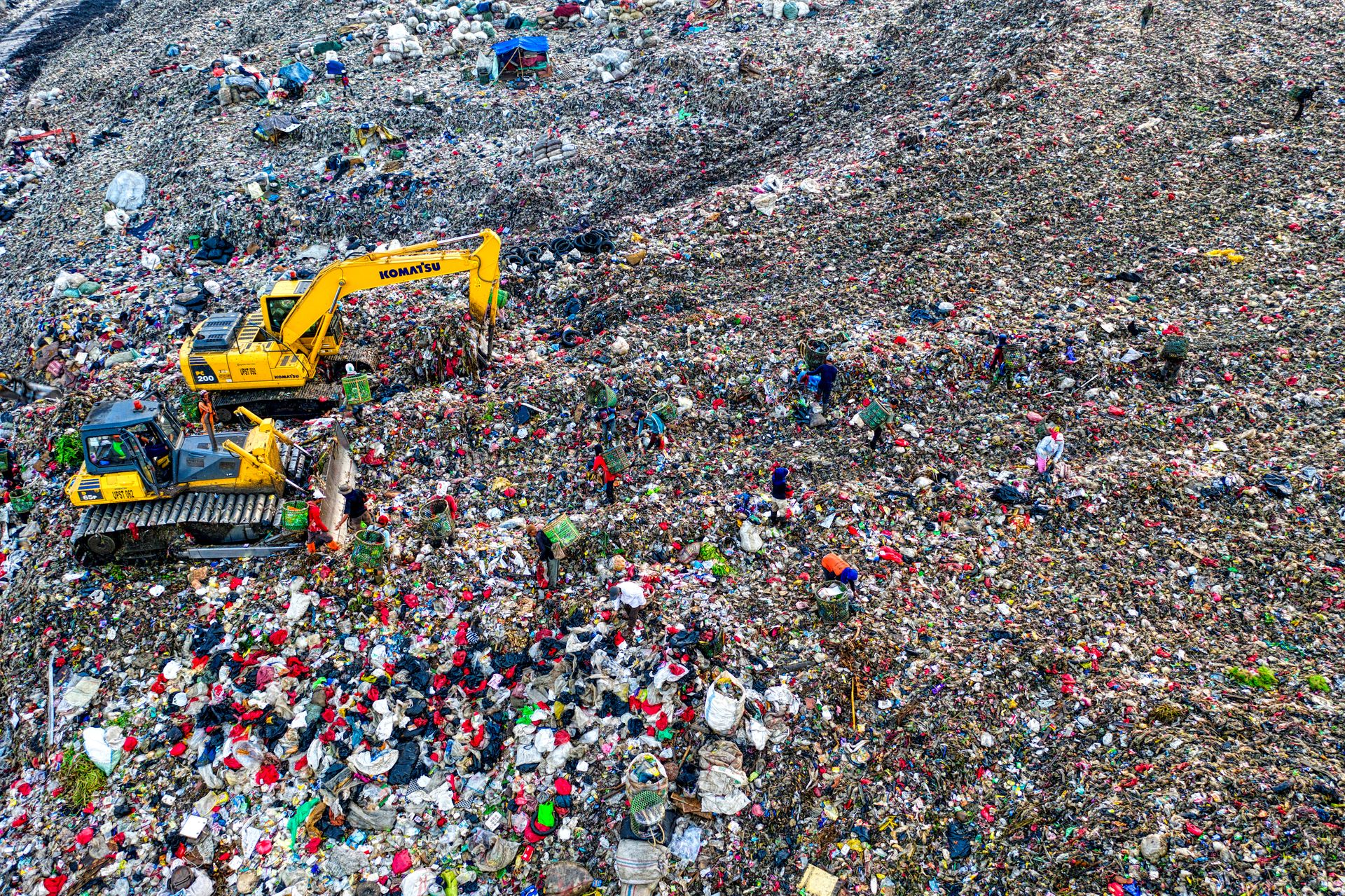
A significant share of the plastic waste generated through hyper-consumption in the wealthier northern hemisphere ends up in landfills and dumpsites in the global south. This practice of a more prosperous country emptying its trash in a less prosperous one has now come to be known as waste colonialism. This environmentally destructive “culture” is facilitated through exploitative agreements made under deceptive promises of “recycling.” But this is not just an environmental problem. It holds deep features of systemic inequality and historical oppression. According to the OECD, Japan, the Netherlands, Germany, Spain, the United Kingdom and the United States were among the largest OECD exporters of plastic waste to non-OECD countries in 2023.¹ This waste export was often done under the guise that the plastics would be recycled, only for the promise to be broken.
When waste arrives before waste management
As a child growing up in a town on the fringes of the countryside in Plateau State, Nigeria, I got to experience first-hand the local Indigenous communities’ interactions with nature. There were times when I would visit school friends and neighbours, as many children in the community did then. And in a moment of dry thirst induced by playing under the hot Sub-Saharan sun, my friend’s mother would refuel us with snacks and perhaps the coolest and freshest glass of water that I had ever had. I remember how surprised I was the first time it happened, upon close inspection, to discover that the source of this refreshing glass of water was a large clay pot. Many Africans reading this post will also remember coming across various kinds of containers made of calabash for holding food or alcoholic beverages like palm wine. (A calabash is a gourd fruit whose hard shell is used as a utensil.) Calabashes are 100% biodegradable and were, alongside clay and other natural materials, once the primary materials used to create utensils in African and other Indigenous communities. Humans across various continents have grown and used calabashes in their households for as far back as 11,000 years.
That is a long time compared to plastic, which took the world by storm after its invention by Alexander Parkes in the mid-1850s, during the Industrial Revolution. Since then, while humans have found myriad uses for it, our major problem has been how to get rid of it. In many African societies, recycling challenges are often attributed to inadequate infrastructure, limited funding and weak legislation. This, however, is not the whole story. Many attempts to encourage behaviours like waste separation, avoiding open dumping and burning, and participation in formal recycling networks have often been shunned by the local population. Experts suggest that this resistance could be explained, at least in part, by the relationship of pre-urban African societies to waste (mostly organic), which was aligned with ecological cycles, compared with that of urban societies, which have to deal with waste that is very difficult to get rid of, such as plastics.²′³The assumption that local communities already accept that waste should be contained, separated and processed is not true in every society. None of this is to blame communities: those who produce and export plastic carry far greater responsibility for what becomes of it.
Attitudes are only part of the picture. As trade brought goods wrapped in plastic, calabashes and clay pots, which returned to the soil, gave way to containers that stayed. Many communities received the packaging without the infrastructure to manage what remained, and some even received waste from abroad. Waste, in other words, arrived before waste management did.
Human health consequences of plastic pollution
In many African communities, waste is burned to reduce the volume of rubbish or because collection services are inadequate. Burning plastic and mixed household waste releases fine particles, toxic gases and other harmful pollutants. Exposure can irritate the eyes and lungs, and may worsen asthma and increase the risk of cardiovascular and respiratory diseases. People living near dumpsites and waste-burning areas, as well as waste workers and children, may face particularly high exposure. As an epidemiologist, I know how hard these exposures are to measure. Smoke from a burning dump doesn’t come with a label, and the communities most exposed are often the least studied. In settings like these, weak evidence frequently reflects missing data rather than missing harm.
Waste dumped in open spaces, drainage channels and waterways can release harmful chemicals, pathogens and other pollutants into the environment. Rain can carry these contaminants into rivers, wells and groundwater, while polluted soil can affect crops grown for human consumption. These pathways can threaten access to safe drinking water and food, increasing the risk of infections and exposure to hazardous substances.
As plastic waste breaks down, it forms tiny particles known as microplastics, which can enter the air, soil, water and food chain. Humans may be exposed by eating contaminated food, drinking water or inhaling airborne particles. Microplastics have been detected in various parts of the human body, but the extent to which they cause disease and the long-term consequences of exposure are still being investigated. Their widespread presence nevertheless raises important questions about environmental safety and public health.
Livestock and food security: Cattle, goats, sheep and other animals may accidentally ingest plastic while grazing near dumpsites or feeding on contaminated land. This can cause digestive problems, injury and, in severe cases, death. Waste pollution can also damage agricultural soils and waterways, threatening crop production, livestock health and the livelihoods of farmers. For communities that depend on local agriculture and livestock, these effects can undermine food security and household incomes.
Climate implications and growing environmental and health consequences: Poor waste management contributes to climate change. Decomposing organic waste in landfills releases methane, a powerful greenhouse gas, while plastic production relies heavily on fossil fuels. Open burning releases carbon dioxide and other pollutants, adding to the environmental burden. Climate change, in turn, can intensify heat stress, flooding and the spread of certain infectious diseases. When waste blocks drainage channels, it can also worsen urban flooding, creating conditions that increase exposure to contaminated water and disease.
Ultimately, plastic pollution and poorly managed municipal waste are not merely aesthetic or environmental problems. They are public health concerns that affect the air people breathe, the water they drink, the food they eat and the livelihoods on which they depend. The consequences are particularly serious for communities that lack reliable waste collection, safe disposal facilities and access to adequate healthcare. Public health teaches us that disease rarely falls at random. It follows exposure, and exposure follows inequality.
What can locally affected communities do about it?
Africa’s waste problem is becoming harder to ignore. From plastic-clogged drains to overflowing dumpsites, waste is affecting our communities, waterways and health. But the solution is not simply to clean up more rubbish without an end in sight. We need to rethink how we produce, use and dispose of things. So where do we start? Here are a few practical steps:
Produce less waste: The simplest way to deal with waste is not to create it in the first place. Communities can reduce their dependence on single-use plastics by using reusable bags, bottles and containers (for example, by innovating around the nature-respecting calabash mindset of our ancestors). Businesses can also reduce unnecessary packaging, while African governments can introduce policies that discourage excessive plastic use, as is already the case in Rwanda and Kenya.
Collect waste properly: Waste that is produced needs to be collected before it ends up in streets, drains and rivers. Reliable waste collection should reach everyone, including poorer and informal communities. Separating waste at home or at collection points can also make recycling and composting much easier. Waste separation is a habit I personally practise.
Turn waste into a resource: Not every item we throw away is useless. Plastic, glass, paper and metals can be recycled, while food and other organic waste can be composted or used to produce energy, such as methane, which can be used for cooking or other energy-demanding activities. These novel systems and this new relationship with waste can reduce pollution while creating jobs and new businesses.
Stop dumping and burning waste: Some waste will always remain after reuse and recycling. But that does not mean it should be dumped in open spaces or burned. Open dumping and burning can pollute the air, soil and water. Communities and governments need safe disposal facilities, and stronger action needs to be taken against illegal dumping.
Make everyone part of the solution: Waste management cannot be left to governments alone. Households, businesses, community organisations and local authorities all have a role. Schools can teach children about waste, businesses can take greater responsibility for their products, and communities can organise local recycling and clean-up initiatives.
Fight back against waste colonialism: Africa is not the world’s waste bin. Wealthier nations have long exported hard-to-manage waste to countries with weaker rules, leaving communities that never produced it to bear the health costs. We can push back by demanding transparency, enforcing import restrictions, and building local recycling capacity. The Bamako Convention, in force since 1998, already commits its member states to banning hazardous waste imports into Africa; the task now is to enforce it. Every community has the right to a clean environment and a say over its land.
What Indigenous knowledge can teach us
Remember that clay pot from my childhood? Looking back, it taught me something no textbook did. That pot was made from the earth, it kept water cool without electricity, and when it finally cracked, it simply returned to the soil. Nothing about it needed a “waste management strategy.”
This is the quiet wisdom in many Indigenous traditions: materials come from the land, serve their purpose, and go back to the land. Calabashes, clay, woven fibres and leaves were not “disposable.” They were part of a cycle. Things were repaired, reused and passed on, and what could no longer be used became food for the soil.
Interestingly, I found an echo of this on that train in Japan. The Japanese concept of mottainai, a feeling of regret when something is wasted, hints at a similar mindset. Perhaps there were no goblins after all, and no secret vault either. Just a culture that takes responsibility for what it uses. To be fair, no country has this fully figured out: Japan is also among the largest exporters of plastic waste to non-OECD countries.¹
To be clear, this is not a call to romanticise the past or abandon modern life. Our ancestors did not have to contend with polystyrene or sachet water. But their knowledge offers something valuable: a different starting question. Instead of asking “how do we get rid of this?”, they asked “what happens to this when we are done with it?”
Designing products with the end of their life in mind, valuing repair over replacement, and treating the environment as something we belong to rather than something we use: these are old ideas that our modern problem badly needs.
Conclusion
The turtles tangled in plastic, the burning dumpsites and the shipments crossing oceans converge on the same painful truth: we cannot recycle our way out of a crisis created by how we live.
Better recycling matters, and so do collection systems, stronger laws and a firm stand against waste colonialism. But if we only improve the clean-up, we are mopping the floor while the tap runs. The deeper work is rethinking our relationship with materials, with consumption, and with the natural world that supplies everything we have.
That means asking harder questions before we buy: Do I need this? How long will it last? Where will it go? It means holding companies accountable for what they produce, and it means rediscovering the sense that nothing we make should outlive its usefulness by centuries.
Back in that train carriage, we laughed at the idea of everyone’s bag being full of rubbish. Perhaps there is a grain of truth in the joke. A clean environment is not magic. It is the result of millions of small choices, shaped by values we choose to share.
The calabash is still here, waiting to remind us of the wisdom of our ancestors. Will we listen?
References
1. Brown, A., Laubinger, F. & Börkey, P. Monitoring Trade in Plastic Waste and Scrap 2025. (OECD, 2025). doi:10.1787/3ac3688c-en.
2. Ehimare, E. From Biodegradable Living to Plastic Urbanism: Historical Roots of Recycling Behaviour in Sub-Saharan Africa. SSRN Journal (2026). doi:10.2139/ssrn.6174979.
3. Anokye, K. & Mohammed, A. S. Indigenous traditional knowledge for cleaner waste systems and sustainable waste management system in Ghana. Cleaner Waste Systems 9, 100165 (2024).