
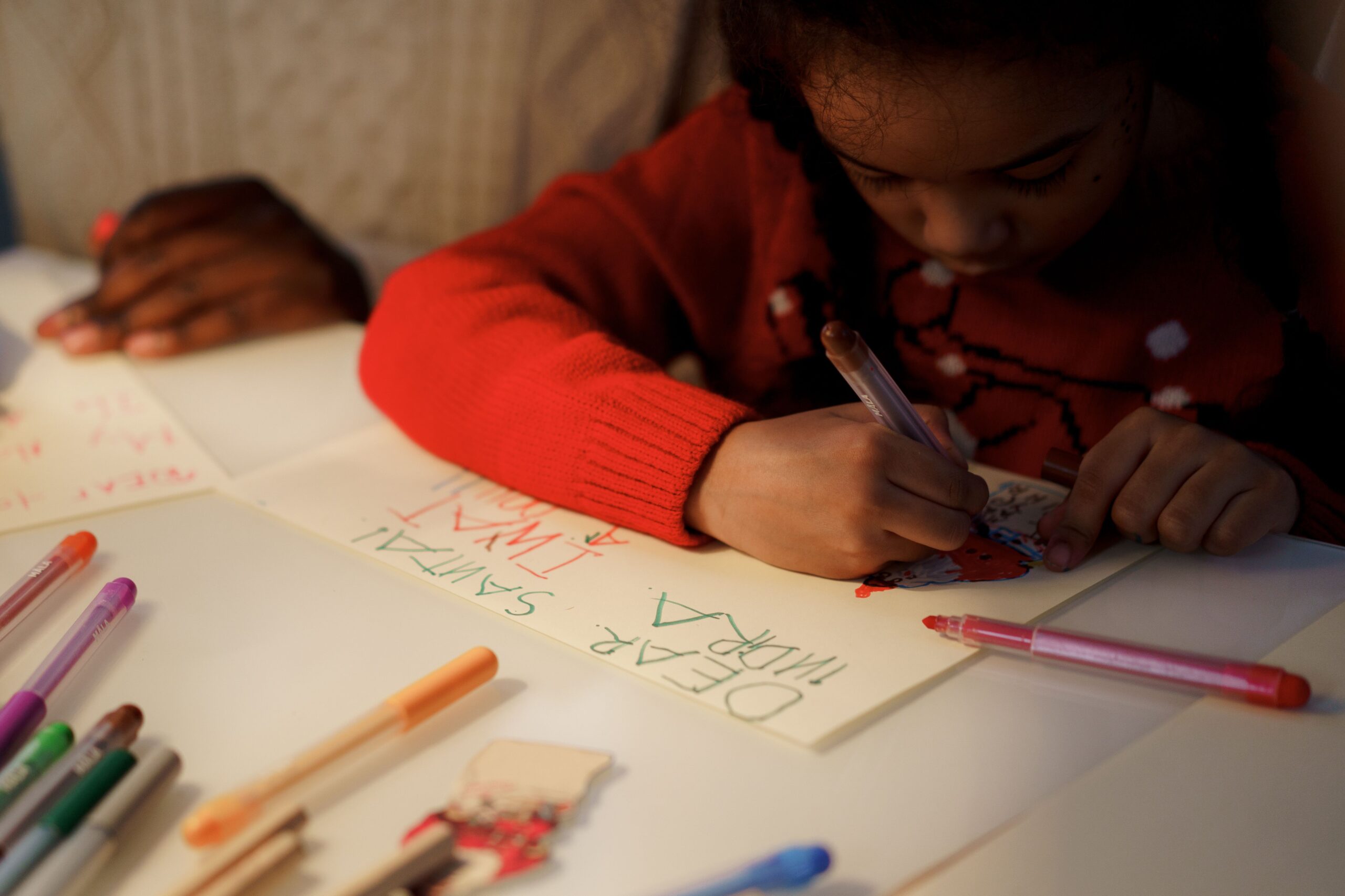
The news is on in many households. It is always on. In a living room somewhere, sometimes a boat appears on the screen. It is overcrowded, half-capsized, somewhere on a troublesome sea that has no interest in people crossing it. Other times, a city appears with a building, or what remains of a building before it was forced to fall. There’s a child on a stretcher. An ambulance blares its sirens through the TV to the living room. Then on the screen, there are people carrying a stretcher, its occupant with a face frozen between the urge to cry and the need to remain strong. In the midst of this, a child looks up from the floor where they have been drawing and playing, doing the quiet work of being young, and watches for a moment. Then they turn to the adult in the room and ask the question that children have always asked, in every language, in every century, whenever they have been allowed to see the world clearly enough to be troubled by it. “Why does nobody help them?” The adult quickly reaches for the remote. That gesture — the slight lean forward, the click, the sudden weather report — is everything this essay is about. It is not about the boat or the sea. It is not about the building. Today, it is about the reach.
I believe that a child is born knowing when something is wrong. Before they have words for injustice, they feel it in the body, in the gut, in the sudden tears that adults struggle to explain away. No one teaches them that. What we teach them, slowly and often without meaning to, is to stop noticing. This essay is about what happens when we choose differently.
There are 2.4 billion children in the world today; each of them will inherit a planet already shaped by decisions they had no part in making, whether on climate, democracy, inequality, or war.1 What they will do with that inheritance depends, more than almost anything else, on whether someone taught them they had the right to question it.
Why This Generation, Why Now
The crises that previous generations debated as future possibilities — climate breakdown, authoritarian resurgence, mass surveillance, widening inequality — are not on the horizon for the generation growing up today. These are the present conditions under which childhood is currently being lived, in Lagos and Los Angeles, in São Paulo and Stockholm.
Freedom House has recorded 17 consecutive years of declining global freedom.2 Many children alive today have never experienced a different trend. Meanwhile, the youngest generation of children today is growing up with exposure to smartphones, apps, and software that harvest their data before they even begin the quest of figuring out their place in the world. Their attention is monetised and their behaviour is profiled long before they can give their consent. Inequality in the world’s major cities has become so entrenched that a child’s postcode functions as a kind of quiet verdict — on their health, their prospects, their likely lifespan. Children born the same year, in the same city, can face life expectancies that differ by a decade or more depending on which side of an invisible line they live on. Climate anxiety compounds this: no longer a metaphor, it is now a documented clinical reality among adolescents who understand, with a clarity that often escapes adults, that the crisis is not coming.3 It is here.
Given these circumstances, it would be easy to despair. But despair is also a rights failure. It robs the next generation of agency, and agency is exactly what human rights consciousness is designed to protect. From the abolition of slavery to women’s suffrage, every major expansion of human rights was preceded by a generation that learned to see injustice as correctable rather than inevitable. Not optimism, exactly. Something harder. The refusal to accept that the way things are is the way they have to be.
That refusal is not born in courtrooms or constitutions. It begins much closer to home.
The First Classroom: Home
Let’s take a peek into a typical scene in a modern-day household. It is past bedtime when 8-year-old Ulrike appears by her mother’s doorway. She is holding the doorframe with both hands. Her mother is on the phone, or at least, seemed to be, just before the small figure appeared. The child has heard something. She hasn’t heard everything, not enough to understand, but enough to know it concerned a family she recognises. A family no longer on the street where they used to live. Where did they go? Did they have to leave because they weren’t allowed to stay?
Her mother, like many parents across Germany and Europe who face this moment in kitchens and hallways and darkened doorways, had not prepared an answer for tonight.*
Ulrike’s mother is not unusual. She is every parent who has stood at the intersection of a child’s instinctive moral clarity and the complexity of the world, deciding in three seconds how much truth fits in a bedtime conversation. What she says next, or doesn’t, will teach her daughter something about the world. The home is therefore not a neutral space. It is the first rights environment a child ever inhabits, and it is always teaching.
Children learn long before anyone teaches them. They watch how adults talk about people who are not in the room. They notice whether the suffering of strangers is acknowledged or switched like a TV channel. What makes a home rights-conscious is rarely politics. It is the small daily habit of naming what is unfair, staying with a hard question instead of deflecting it, saying, “I don’t know, but let’s figure it out.” Not perfect answers. Just the willingness to keep looking.
Not every parent can do this. When survival is the priority, reflection is a luxury. That too is a rights issue. For the children whose homes cannot hold these conversations, there is another room. Another adult. Another chance. Will it be worth it?
The Role of Education & Curriculum
It goes without saying that schooling plays a significant role in teaching citizens about the meaning and value of a rights-based view of the world. At least in my experience, education does this indirectly through the stories we are required to read in literature and history classes, in which we feel a certain unease when we encounter the injustice threaded through them. I am thinking of Shakespearean drama, Greek tragedy, and, in my own case, Cyprian Ekwensi’s An African Night’s Entertainment, which we were required to read in school in Nigeria.
While writing this, I tried to recall a moment in which a teacher explicitly taught me or my classmates something about human rights. After searching my memory – many decades back now – and after asking friends who shared those classrooms with me, I have concluded that the lesson was never stated directly. It arrived subtly, through required reading and the quiet inculcation of moral sensibility that good literature performs clandestinely.
Ekwensi’s novel tells the story of Abu Bakir, a man so hollowed out by jealousy and the desire for vengeance that he pursues another man – Mairama’s father – across decades and continents, destroying everything in his path. Mairama herself, the young woman at the centre of the story, has no say in her own fate. She is promised, pursued, and fought over by men whose grief and pride matter more to the world around them than her life does. The violence is real. The cruelty is dressed as honour. And the reader, at least this reader, sitting in a Nigerian classroom decades ago, felt the wrongness of it before having any words for why.
That feeling is the beginning of rights consciousness. Neither my friends nor I called it that. Nobody needed to. The book did the work quietly, and we were left to stumble toward the conclusion ourselves.
This raises the question: what happens to the children who never stumble? Who read the same books and feel nothing, because no one taught them to feel something? Great rights education does not leave that to chance.
The Inheritance We Choose
The child is still in the doorway. The news is still on. The boat is still listing on a sea that has no interest in the people crossing it. The building is still falling. Nothing about the world has changed except that we have fewer excuses now for not knowing what to call it. We have been here before. From the abolition of slavery to women’s suffrage, every generation that pushed the boundaries of human dignity outward did so because someone refused to reach for the remote. Refused to let the question die in the hallway. Refused to let a child grow up believing that the way things are is the way they have to be. That is all this is. Not a policy. Not a syllabus. A refusal. The child is still asking. What we say next is the whole thing.
References
1. The State of the World’s Children 2024 | UNICEF. https://www.unicef.org/reports/state-of-worlds-children/2024 (2024).
2. The Uphill Battle to Safeguard Rights. Freedom House. https://freedomhouse.org/report/freedom-world/2025/uphill-battle-to-safeguard-rights.
3. Hickman, C. et al. Climate anxiety in children and young people and their beliefs about government responses to climate change: a global survey. Lancet Planet. Health 5, e863–e873 (2021).
*The German parent in this section is a composite, it is condensed from the experiences of many parents across Europe who navigate these conversations with their children. The moment is only illustrative, not singular. And while it is fictitious, it is a common experience.”